December is when people pretend the calendar is a reset button. New year, new habits, new tone, new patience. In 2019, that fantasy feels especially fragile, because this year didn’t just happen to us. It trained us.
Politics didn’t merely dominate the news cycle. It colonized the nervous system. It became the background hum under daily life, the constant sense that something was breaking somewhere, and if you weren’t looking at it, you were negligent. The country wasn’t just polarized. It was conditioned.
We spent the year inside an information environment designed to keep us alert, agitated, and certain. It didn’t have to convince you of anything. It only had to keep you watching.
Impeachment as content
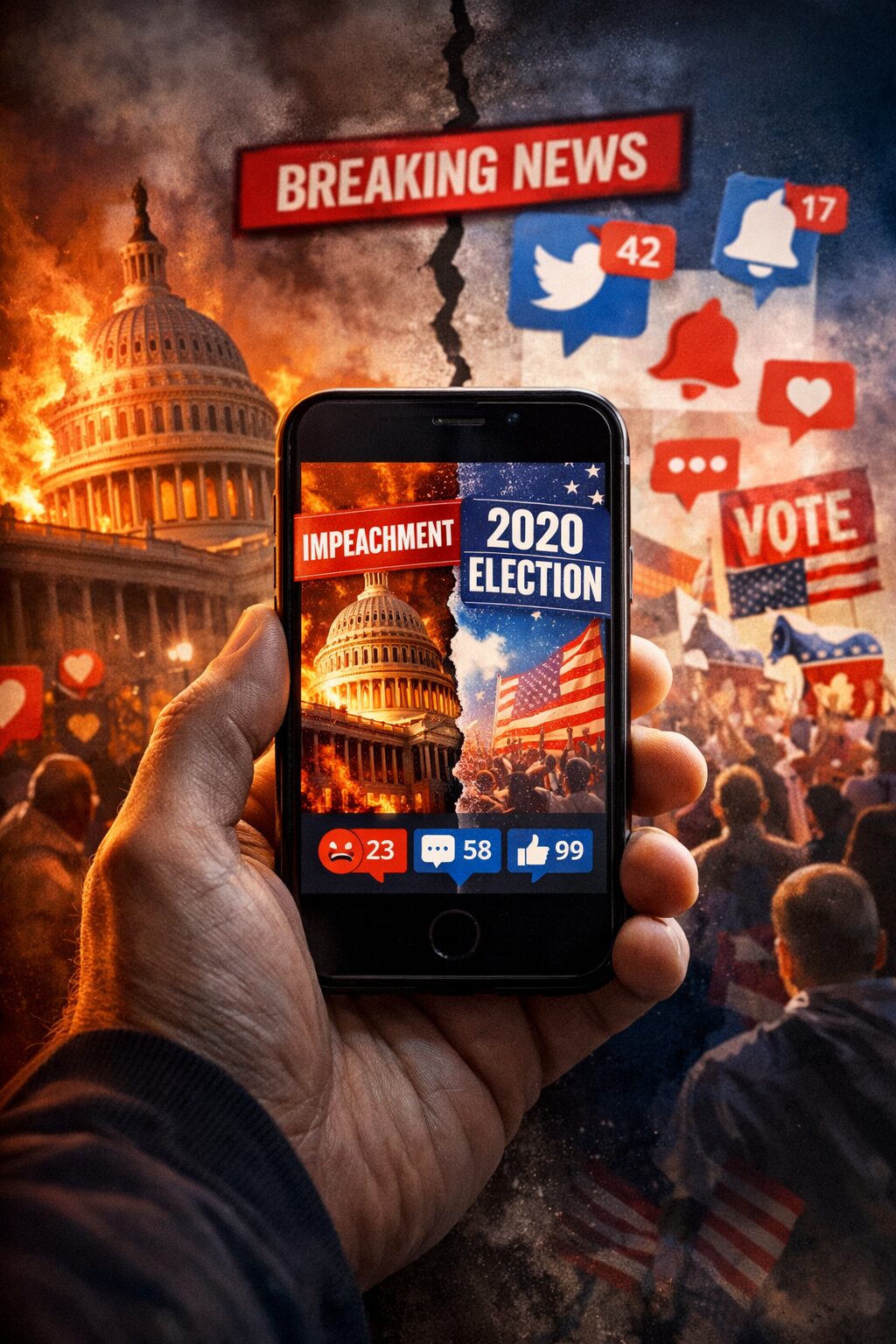
Impeachment happened the way everything happens now, which is to say, in fragments. A clip. A quote card. A thread. A “BREAKING” banner that stays up so long it begins to feel like décor. A process that is supposed to be solemn and procedural became, almost instantly, a format.
It’s not that the stakes weren’t real. It’s that the medium made reality optional.
By the time most people encountered the substance of testimony, they’d already consumed the interpretation. And not just any interpretation, their interpretation. The version that arrived pre-chewed, pre-sorted, and ready to be shared as proof that they were right and the other side was deranged.
This is how politics survives the attention economy. It stops being an argument and becomes a product. It’s packaged into outrage bites and sold to the audience most likely to feel something about it. Not to learn, but to react.
And reaction is the commodity.
Two Americas, same phone
One of the defining lies of 2019 is that we’re divided because we disagree. Disagreement is normal. A functioning democracy is supposed to contain conflict. The deeper problem is that we increasingly live in different emotional climates.
You can see it in the way people talk about the same event. Not just what they conclude, but what they assume is obvious, what they treat as disqualifying, what they laugh at, what they fear, and what they refuse to consider. Many Americans do not share a baseline anymore. Not a baseline of values, that’s always been messy. A baseline of reality.

The phone is the great equalizer, we were told. Information for everyone. A library in your pocket.
In practice, it’s more like a personalized pressure chamber.
The feed doesn’t show you “the news.” It shows you what makes you stop scrolling. It learns your tells. It learns what makes you angry, what makes you smug, what makes you feel righteous, what makes you feel threatened. Then it serves you more of it, like a bartender who notices you drink faster when you’re upset.
This isn’t a conspiracy. It’s a business model.
Everyone is a brand now
In 2019, politics became a form of self-presentation. A way to signal your tribe, your values, your taste, your moral worth. It’s not enough to have an opinion. You have to perform it.
That’s why arguments feel pointless. You can’t persuade someone out of an identity they’re wearing. You can’t fact-check a vibe.
So we get politics as wardrobe. Politics as memes. Politics as a steady stream of declarations designed less to convince outsiders and more to reassure insiders. We post to prove we’re on the right side. We share to show we’re informed. We dunk to show we’re fearless.
It’s exhausting, because it is not participation. It is theater.
The weird comfort of permanent emergency
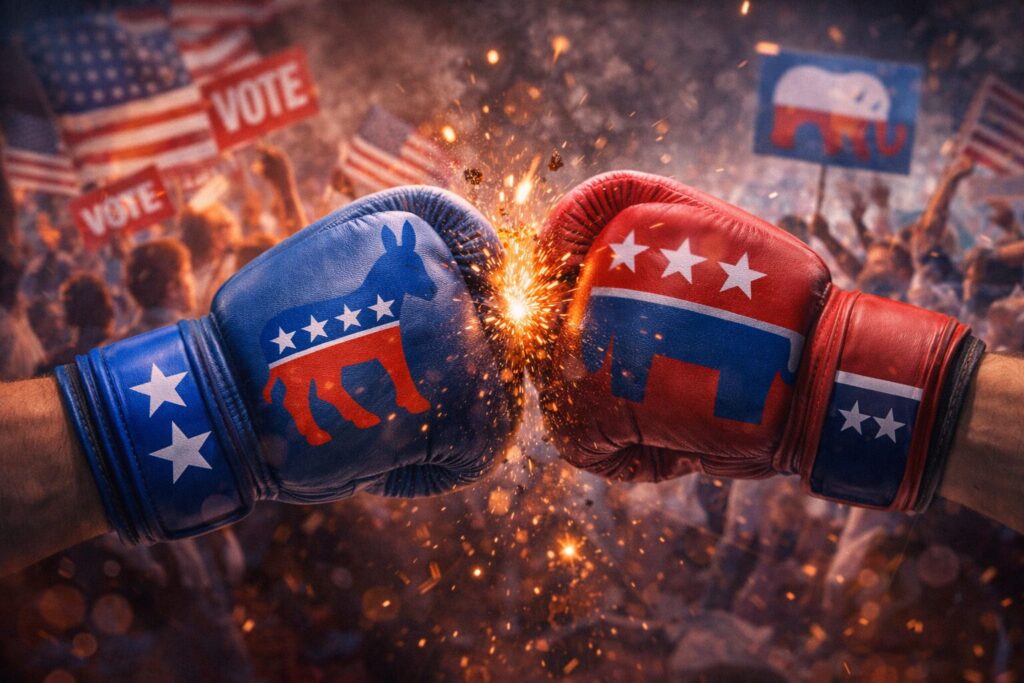
And the stage manager is the algorithmic incentive structure that pays you in attention.
Here is the part that should worry you most. The emergency becomes familiar.
At some point in 2019, many of us stopped being shocked. The scandal that would have once dominated months of headlines now has a lifespan of about two days, and then it’s replaced by the next scandal, and then the next. The outrage cycle doesn’t end because the machine cannot afford quiet.
Quiet is the enemy. Quiet creates room for reflection. Reflection creates restraint. Restraint slows engagement.
So we live in the permanent now, where everything is urgent and nothing is processed.
The result is emotional inflation. It takes more and more to move us, and when we are moved, we are moved instantly to the extremes. Every story arrives with the implied instruction: react like this, immediately, or you don’t care enough.
This is not how citizens are made. It’s how spectators are trained.
The 2020 election will not fix your nervous system
A lot of people are treating 2020 like a cleansing ritual. Win and everything gets better. Lose and everything is ruined. That kind of thinking is understandable, but it’s also the same thinking the feed thrives on. It turns politics into apocalypse because apocalypse keeps you glued to the screen.
Elections matter. They matter enormously. But the deeper damage of 2019 is not just institutional. It’s psychological.
If you want a healthier democracy, you need healthier citizens. And that starts with noticing what the information environment is doing to you.
Notice how quickly your mood shifts when you open your phone. Notice how often you feel certain about something you haven’t read. Notice how rarely you change your mind. Notice how satisfying it is to hate the other side. Notice how much of your political life is built on images of people you’ve never met.
None of this is a moral failing. It’s a system doing what it was built to do.
But if you don’t see the system, you will keep mistaking your reactions for your values.
A small rebellion for 2020
I’m not going to end with a sermon about unity. Unity is not a setting you turn on. And I’m not going to end with a list of productivity hacks, because the problem isn’t that we’re inefficient. The problem is that we’re being managed.
So here’s a smaller, more practical rebellion.
Read one thing in full before you share it.
Watch one segment without commentary.
Talk to one person offline who isn’t in your tribe.
Criticize your own side once, publicly, without immediately pivoting to “but the other side.”
Leave your phone in another room for an hour and see what your brain does in the silence.
These are not grand gestures. They won’t trend. That’s the point.
Because in 2019, the feed learned your triggers. It learned how to keep you hot, how to keep you loyal, how to keep you certain. It learned how to turn politics into a daily emotional subscription.
If you want 2020 to be different, you don’t just need a different result.
You need a different relationship with the machine.
Leave a Reply