

In March, the crisis arrived with the shock of the new: closures, quarantine language, numbers that climbed too quickly to feel real. In April, the crisis settles in. The country begins to discover that a pandemic is not only a medical event. It is a governance event. It forces the state to do something it rarely does well at speed: deliver.
Deliver information. Deliver coordination. Deliver money. Deliver competence.
And because the United States is a nation that argues about the state’s legitimacy even as it demands the state’s intervention, the delivery becomes political.
Relief is policy, but it is also trust
When government sends relief, it is doing more than moving dollars. It is making a promise about who counts.
A stimulus check is not merely an economic measure. It is a declaration of membership. It tells people that the state recognizes their vulnerability and considers their stability worth protecting. It is one of the clearest signals a republic can send that citizenship is not only a set of obligations, but also a shared responsibility.
This is why the mechanics matter. Relief that is delayed, confusing, or uneven is not just inefficient. It is corrosive. It teaches the public that the state can mobilize rhetoric faster than it can mobilize help.
In April 2020, citizens will learn a great deal about their institutions from the simple question of whether money arrives when it is needed.
The temptation to treat crisis as branding
There is another danger in this moment. The temptation to treat relief as performance.
A crisis expands executive power, but it also expands executive visibility. Leaders are rewarded for appearing decisive, for owning the narrative, for projecting strength. The public, frightened and exhausted, can begin to confuse stagecraft for capacity.
But capacity is not a press conference.
Capacity is supply chains and data. It is coordination across agencies. It is the boring competence of paperwork done correctly. It is rules that are clear enough to be followed. It is systems that can absorb demand without collapsing.
The true scandal of April will not be a single outrageous statement. It will be the discovery that the machinery of delivery is thinner than people assumed.
Federalism under strain
The American system is not built for unified action. It is built for shared action. There is a difference.
States are laboratories in theory, but laboratories require resources and coordination. In a crisis, the lack of coordination becomes a multiplication of failure. Fifty approaches to the same problem can be productive when there is time to learn. It is less productive when time is measured in infection curves and unemployment claims.
In April, the federal government’s posture toward the states matters deeply. Is the relationship cooperative. Is it punitive. Is it transactional. Is it coherent.
If the federal response becomes a competition among states for resources, the country will learn that it is less a union than a marketplace.
That lesson will outlive the virus.
The paperwork republic
A democracy is not only ideals. It is forms. It is databases. It is agencies that can handle volume. It is staff who know how to process claims. It is phone lines that get answered. It is websites that do not collapse when people need them.

April 2020 will highlight a fact many Americans prefer not to contemplate. That the state is not an abstraction. It is a set of systems. And systems can fail.
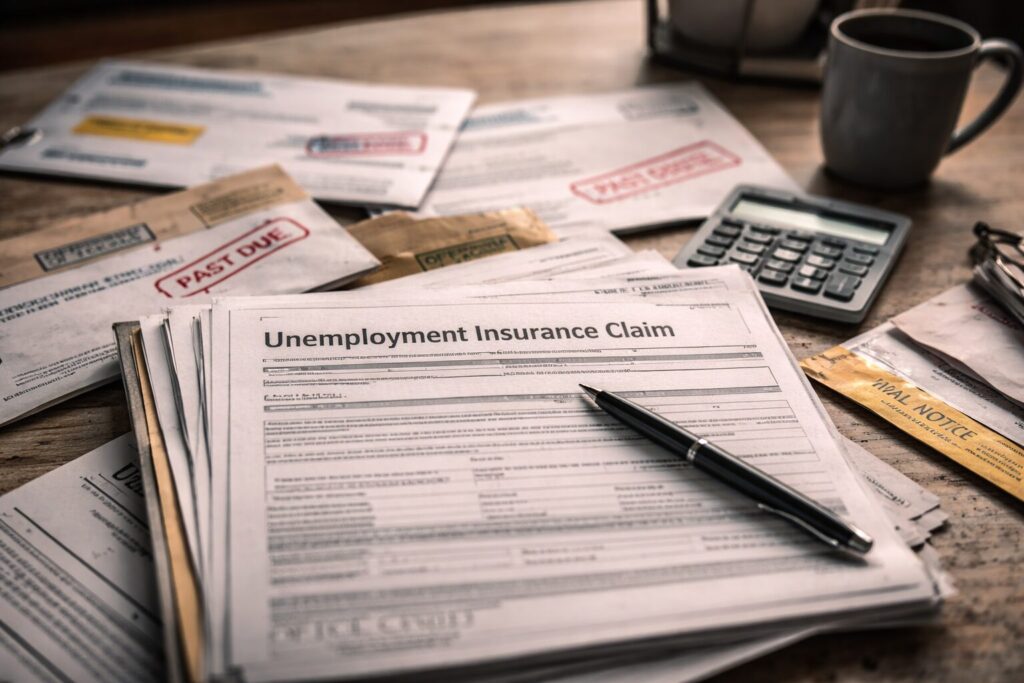
When unemployment systems crash, when relief applications are unclear, when people wait on hold for hours, it is not merely inconvenient. It is a form of institutional humiliation. It teaches citizens that their suffering is too large for the government to recognize at human scale.
A republic that cannot process its own emergency will not be trusted the next time it asks for sacrifice.
Accountability in a hurry
Emergency spending and emergency procurement create a perfect environment for waste, favoritism, and opportunism. Again, this is not automatically sinister. Speed introduces risk. But speed also introduces temptation.
In April, oversight will be described as obstruction. The argument will be that we do not have time for scrutiny. That we must act now and audit later.
Be wary of that framing.
Oversight is not a luxury. It is how a democracy ensures that urgency does not become a blank check. It is how the public learns whether relief is being distributed fairly or being used as a political instrument.
There is a difference between moving fast and moving blindly. A functioning republic can do both: act quickly, and document what it is doing.
The moral architecture of a stimulus
Stimulus policy contains an implicit moral model. It answers questions the culture avoids asking.
Who deserves help. Who is considered “essential.” Whose work is recognized. Who is treated as disposable. Who gets the benefit of doubt. Who is asked to prove their hardship. Who is required to navigate bureaucracy while they are already drowning.
These choices are political, whether or not politicians admit it. They will shape how citizens interpret the state for years. The legitimacy of institutions is not made in speeches. It is made in experiences.
If people experience relief as something that happens to other people, their trust will collapse. If they experience relief as arbitrary, their resentment will grow. If they experience relief as a function of connections and insider access, their cynicism will become permanent.
The republic after the check
There is a story Americans like to tell about themselves. That they are self-reliant. That they do not need help. That the state is a nuisance.
April 2020 is testing that story.
The country is discovering that modern life depends on invisible coordination and collective action. That the market is not a substitute for public health. That individual grit does not replace systemic capacity. That even the most skeptical citizen will demand institutions when the ground shifts under their feet.
This is not an argument for a larger state in the abstract. It is an argument for a functional one.
When the crisis passes, there will be a temptation to treat relief as a temporary exception and return to contempt. To declare victory and forget the administrative lessons. To pretend that the systems will work next time because we would like them to.
But the next crisis is not a question of if. It is a question of when.
If April 2020 teaches anything, it is that a republic is only as strong as its ability to deliver on its promises. Liberty is not diminished by competence. Liberty is endangered by institutional failure.
The stimulus is not just money.
It is a test of whether the state can still do the simplest democratic thing: show up.
Leave a Reply