America’s political crisis is not that we disagree. It is that we are learning to disagree in a way that makes consequences impossible.
In February 2020, the headlines arrive with the familiar rhythm of outrage, fatigue, and instant forgetting. The disputes are framed as tribal combat, not as questions of principle. The institutions keep moving, technically intact, while the habits that make them meaningful are worn down in public.
Beneath the daily noise is a quieter shift that matters more. The country is being trained to respond to misconduct with a shrug.
The shrug has a slogan now. It sounds like this: so what.
So what if norms are broken. So what if oversight is treated as sabotage. So what if the office is used to test the limits of the system. So what if the rules are bent, then bent again, until the bend becomes the new straight.
So what becomes a governing philosophy when it is repeated enough times, and repeated until it hardens into precedent.
The emergency that never ends
A functioning democracy requires a concept of normal. It requires a baseline of rules and expectations. Not perfection, not purity, but a shared understanding that certain things are disqualifying, certain behaviors trigger accountability, and certain lines cannot be crossed without consequence.
We have been living without that baseline for a while now.
In the absence of normal, everything becomes an emergency. Every week is framed as the week that will decide the future. Every scandal is treated as the last straw, even as the last straw keeps getting carried away and replaced. This produces two outcomes. It exhausts the public, and it teaches the powerful that endurance is victory.
If you can outlast the outrage cycle, you can outlast accountability.
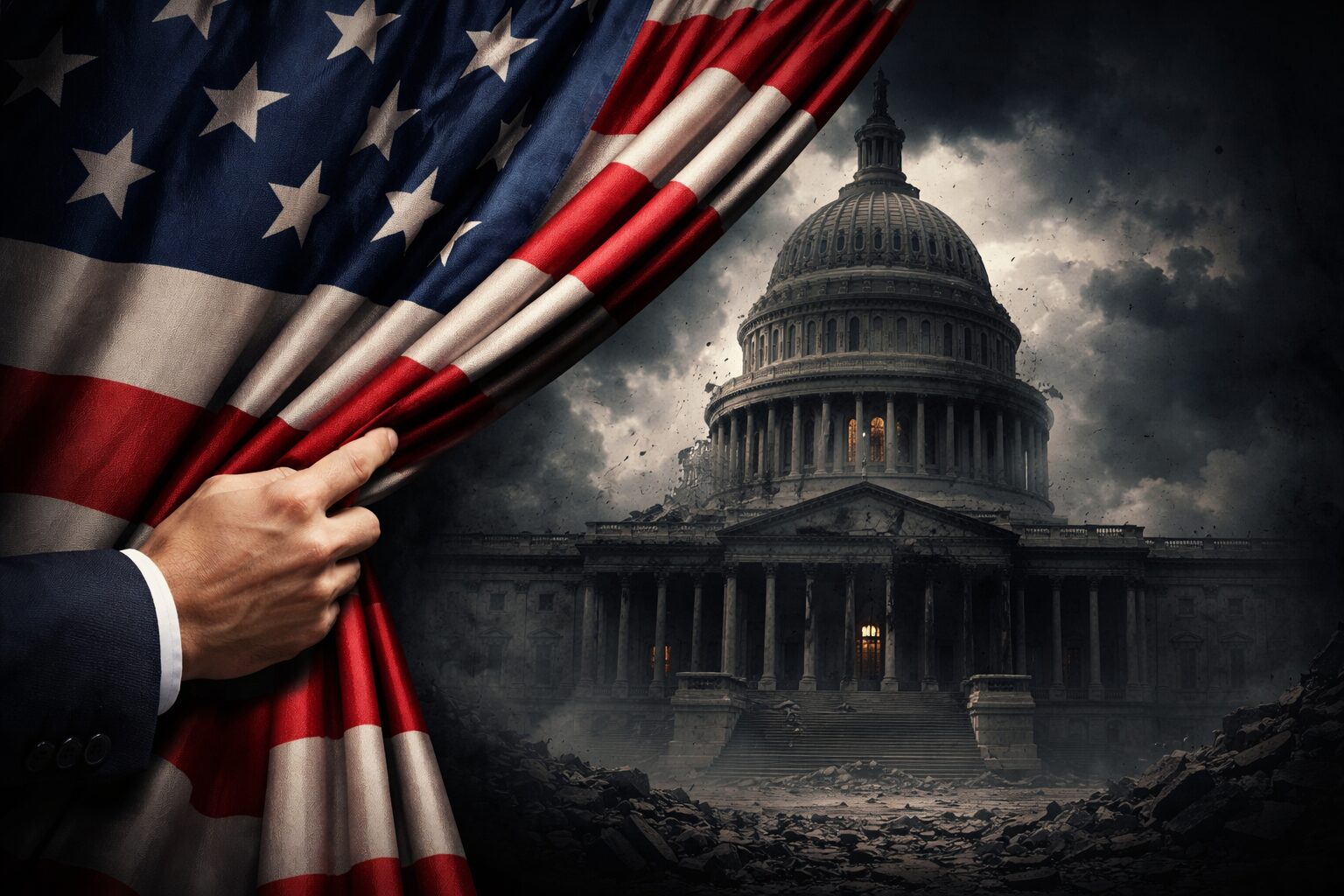
The slow coup is not a dramatic takeover. It is the steady normalization of rule-breaking through repetition, distraction, and partisan discipline.
Oversight as hostility
One of the most corrosive ideas in modern American politics is that asking questions is an act of aggression. Oversight is described as harassment. Investigation is described as a witch hunt. Demands for documents are framed as persecution. People who want clear answers are treated as enemies of the state.
This logic is poison.
In any healthy system, oversight is the point. Congress is not designed as a cheering section. It is designed as a check. The role of a legislature is to ask the hard questions, not to applaud executive performance.
But February 2020 arrives with a loud lesson. Formal processes can occur, and still fail to produce meaningful constraint. The country can watch a constitutional mechanism run its course and conclude, not that the system worked, but that consequences are optional when you have the votes.
That is what “so what” looks like in institutional form.
The public stops expecting answers. The powerful stop fearing consequences. The office grows larger than the rules meant to contain it.
The institutional corrosion you cannot see on television
The damage here is not only moral. It is procedural.
Institutions are not made of marble. They are made of habits. Habits of candor. Habits of restraint. Habits of accepting oversight as legitimate. Habits of treating the public trust as real.
Those habits are fragile. They are also invisible, which means they can be destroyed without a dramatic headline. They can be replaced with new habits, habits of contempt, obstruction, and spectacle.
The television version of politics focuses on characters. The real story is infrastructure.
When leaders learn that a norm can be broken without consequence, future leaders inherit that lesson. When a party learns that loyalty protects misconduct, future officeholders inherit that shelter. When voters learn that “everybody does it,” they stop demanding better.
That is not cynicism. It is decay.
The seduction of tribal immunity
Every political tribe tells itself a story about why its own violations do not count. The story is always the same. The stakes are too high. The enemy is too dangerous. The other side did worse. We cannot afford to be constrained.
This is the seductive lie that turns standards into weapons.
Standards are supposed to restrain power, especially when power is on your side. If a standard only matters when it hurts your opponent, then it is not a standard. It is a tactic.
You can see the consequences in how quickly the public is asked to forget what it just watched. To accept that the process was the point, not the outcome. To accept that accountability is something you gesture at, not something you enforce.
A country cannot be held together by the permanent justification of its own worst instincts.
The lie of inevitability
There is another comfort people reach for in moments like this. The idea that institutions are self-correcting. That the system will naturally return to equilibrium. That adults will arrive and restore order. That the courts will fix it. That the next election will fix it. That time will fix it.
Time does not fix anything on its own.
Institutions do not self-correct. People correct them, and people cannot correct what they have stopped noticing.
If the public becomes habituated to “so what,” then every abuse becomes easier. Every line becomes softer. Every precedent becomes a step down a staircase we pretend is not there until we are too far down to climb easily back up.
What “so what” is really saying
“So what” is not just an attitude. It is an argument.
It says power should not be restrained if restraint is inconvenient. It says rules are optional if you have enough supporters. It says accountability is a luxury for stable times, not a requirement for all times. It says constitutional limits are props and norms are punchlines.
It is the language of a country trying to cope with exhaustion by lowering its expectations.
But lowering expectations is not a survival strategy. It is surrender.
A republic does not collapse when a single scandal occurs. It collapses when the public learns to absorb scandal as background noise. It collapses when people stop demanding that officials act like officials. It collapses when contempt for oversight becomes normal, and when voters accept that their only power is to choose which team gets to break the rules next.
A harder kind of patriotism
In February 2020, it is tempting to believe the only choices are outrage or apathy. That is what the noise wants. Outrage keeps you reactive. Apathy keeps you absent. Both serve the powerful.
There is a third option, and it is harder. The insistence on standards without tribal exemptions.
It is the willingness to criticize your own side when your own side crosses lines. It is the refusal to call accountability a witch hunt when it targets someone you like. It is the insistence that oversight is patriotic. It is the belief that institutions are shared infrastructure, not partisan tools.
This kind of patriotism is not loud. It is not theatrical. It does not trend. It is maintenance.
And maintenance is what democracies require.
The question of February
Here is the simplest question to ask in February 2020.
What would I demand if the other side did this?
That question is the beginning of standards. It is also the beginning of a republic that can survive its own passions.
If you cannot ask that question, you are not defending democracy. You are defending a tribe.
And if tribes are all we have left, then “so what” is not a slogan.
It is a eulogy.
Leave a Reply