
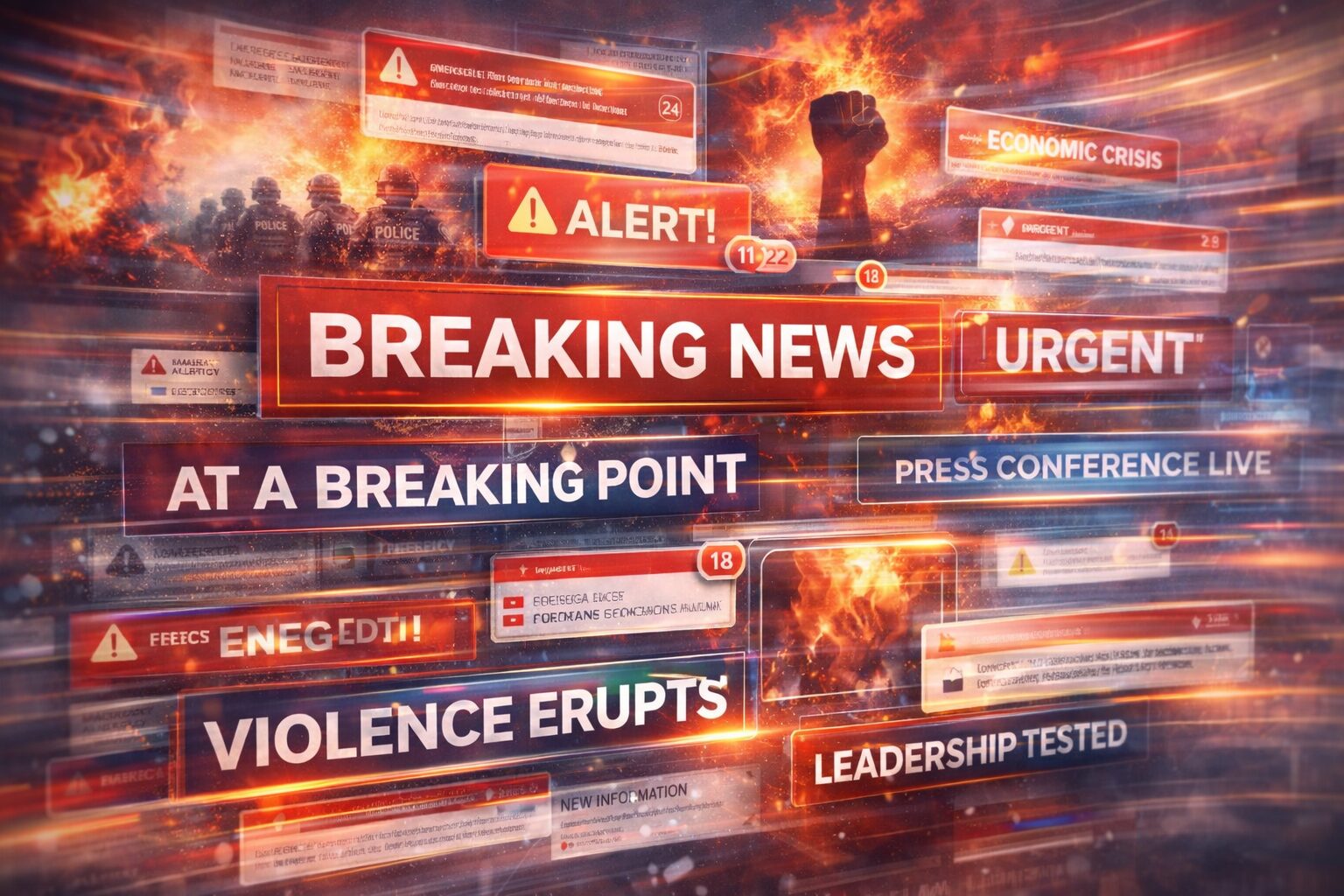
The pause ends unevenly
June does not arrive with a single story. It arrives with many, all competing for urgency. The effort to manage one crisis gives way to the recognition that it never existed in isolation.
What had been framed as sequential now overlaps.
Public health, economic survival, political legitimacy, and social justice no longer wait their turn. They press forward together, demanding attention without hierarchy.
Reopening does not bring clarity
The language of reopening continues, but it no longer promises relief. It exposes trade-offs. Each decision is partial. Each success is conditional.
Rules differ by place and change quickly. Guidance fragments. Enforcement becomes discretionary.
The question is no longer whether systems can restart, but whether they can do so without deepening existing fault lines.
Attention fractures again
The focus that once narrowed around a single threat begins to splinter. New images dominate screens. Old anxieties return. Unfinished arguments resurface.
There is no shared narrative thread strong enough to contain everything happening at once.
Attempts to prioritize are read as avoidance. Attempts to broaden focus are read as dilution.
Authority is tested in public
Leadership faces a different challenge than in March or April. Emergency powers still exist, but moral authority is no longer assumed. Decisions are evaluated not only for effectiveness, but for legitimacy.
Appeals to unity compete with demands for accountability.
The result is a public negotiation over whose voices matter, whose urgency counts, and who bears the cost of delay.
The future is no longer hypothetical
In earlier months, the future was discussed abstractly. By June, it is invoked concretely. Budgets, reforms, and structural changes are debated in the present tense.
The sense that “after” will arrive on its own fades.
What replaces it is a recognition that outcomes are being shaped now, under pressure, and in full view.
No single frame holds
June resists simplification. It cannot be captured by one metric or one headline. Any attempt to compress it into a single story feels inadequate.
This is not a return to normal, nor a continuation of emergency.
It is the moment when accumulated crises refuse to stay separate, and the work of choosing between them becomes unavoidable.
Leave a Reply