America did not enter 2020 with a clean slate. It entered with momentum, and momentum is what politics looks like when standards have already been weakened and the public has learned to tolerate the next thing before it happens.
A new year is supposed to bring a psychological reset. The calendar flips, the headlines change, and we tell ourselves the country can exhale. Instead, the first week of January delivered a reminder that the habits of 2019 were not contained by the year-end. They were merely rehearsals. The question for 2020 is not whether we will face new crises. The question is whether we will treat each crisis as an exception, or as another brick in the permanent structure of permission.
This is how democratic erosion works. Not always through a dramatic rupture, but through a series of choices that become precedents. Through a public that is trained to accept abnormality as the new baseline. Through leaders who learn that consequences are negotiable if your team can hold.
The strike and the shrug
In early January, the United States carried out a strike that instantly raised the temperature of the world. In a functioning political culture, the immediate response would be accountability and clarity. What was the legal basis? What was the strategic objective? What escalation risks were assessed? What comes next?
Instead, we got the familiar split-screen reality. On one side, chest-thumping certainty. On the other, reflexive panic. In between, a smaller and increasingly ignored set of citizens asking the boring questions that adults ask when force is used in their name.
The most revealing part is not the argument itself. It is the speed with which the argument became tribal, and the ease with which standards disappeared. When power is exercised, the first instinct should be oversight. In 2020 America, the first instinct is often to protect the team.
It is worth saying plainly. A presidency cannot be accountable if accountability is treated as sabotage. The constitutional system does not work if oversight is optional, or if Congress is expected to act like a cheering section. And the public cannot function as a check on power if the public has been trained to treat every hard question as disloyalty.
In other words, the strike did not just raise questions about strategy. It raised questions about whether the country still knows how to ask questions at all.
Impeachment did not end. It metastasized.
The impeachment process was supposed to be a reassertion of constitutional limits. It has become, instead, a lesson in how limits can be resisted through repetition, denial, and partisan discipline. The Senate trial is approaching, and the ending feels prewritten, not because the facts are irrelevant, but because the incentives are.
The incentives reward loyalty, not truth. They reward escalation, not restraint. They reward theatrics, not standards.
And here is the deeper injury. Impeachment does not only test the president. It tests the public. It asks whether we still believe that certain behaviors are disqualifying. It asks whether we still care about the idea of public trust. It asks whether there is any conduct that cannot be excused if the outcome is desirable enough.
If the answer becomes “no,” then impeachment does not merely fail to remove a president. It succeeds in removing a concept, namely that the office is constrained.
That is the permission structure, and it does not vanish when the news cycle moves on. It stays. It becomes precedent.
The normalization of escalation
One of the most dangerous developments of the last few years is the casual acceptance of escalation as a political tactic. Not escalation as an emergency response, but escalation as a posture, a brand, and a constant pressure.
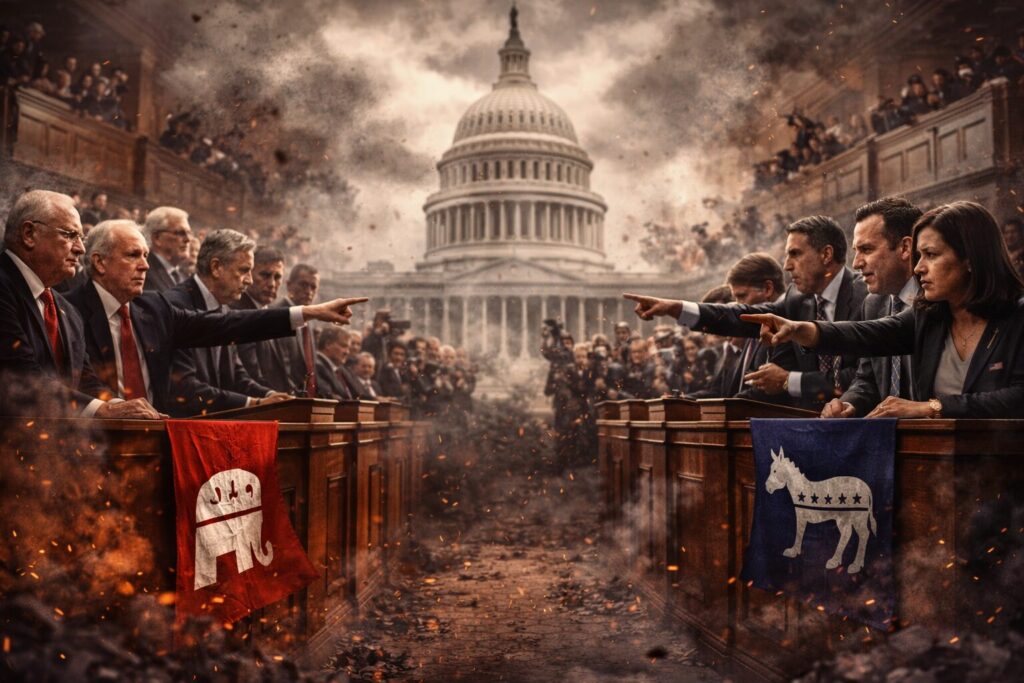
Escalation is seductive because it creates the illusion of strength. It is also corrosive because it narrows the room for competence. When everything is framed as existential, every compromise becomes betrayal and every criticism becomes treason.
This leads to a politics of permanent mobilization. It leads to a citizenry that is constantly agitated but rarely empowered. It leads to institutions that are strained, because institutions are designed for procedures, not for continuous emergency performance.
By the end of 2019, the country had already learned to live inside this posture. By the first week of January 2020, it is clear that we intend to continue.
The standard we are setting for the next president
One of the most dangerous lies in American politics is the belief that rule-bending is acceptable if you trust the person bending the rules. The office matters more than the officeholder. The precedent outlives the personality.
Every time we excuse something on behalf of “our side,” we are writing instructions for the other side.
If you are a conservative, you should not want a Democratic president to inherit a model of unilateral executive behavior that you consider normal today. If you are a liberal, you should not want a future Republican president to inherit a model of rhetorical and procedural warfare that you consider justified today. If you are a citizen, you should not want any president to inherit a public that has been trained to tolerate contempt for oversight.
This is what it means to take standards seriously. Standards are most valuable when they restrain the people you agree with, because that is when they are hardest to apply.
The uncomfortable work of citizenship
The temptation, in a country this exhausted, is to surrender to the simplicity of tribal narratives. To decide that the only goal is victory, and that anything that interferes with victory is naive or disloyal. That temptation is understandable. It is also fatal.
A democracy cannot be maintained by citizens who treat politics as a sport. It cannot be maintained by citizens who accept that truth is negotiable, that institutions are props, and that the only real accountability is whether your team wins the next round.
The work of citizenship is uncomfortable. It requires holding two ideas at once. It requires acknowledging that you can fear the other side’s agenda and still reject your own side’s abuses. It requires admitting uncertainty and still demanding competence. It requires resisting the cheap comfort of contempt.
This is not moral purity. It is maintenance.
The first question of 2020
So here is the question that matters more than any prediction about what will happen next.
When the next crisis arrives, and it will, will we treat it as a moment that requires standards, or as an opportunity for tribal gratification? Will we demand explanations, or will we accept slogans? Will we insist that power be constrained, or will we reward those who test the boundaries?
America’s political crisis is not that we disagree. It is that we increasingly disagree in a way that makes accountability impossible.
January 7, 2020 is not too early to say this. The year will not be defined only by elections and headlines. It will be defined by what we are willing to normalize, one decision at a time.
That is the permission structure of 2020.
And if we do not rebuild standards now, we will spend the rest of the year living inside the consequences.
Leave a Reply