The strangest thing about reopening isn’t that people want it. Of course they do. Humans are not designed to live inside indefinite waiting rooms. Work is not optional for most people. School isn’t just education, it’s structure. Restaurants aren’t just food, they’re social glue. The desire to restart is not shallow. It’s survival.
The strange thing is how quickly reopening turned into a stage show.
Not a plan, a performance. A set of symbols designed to make a declaration: we are done with this.
The virus did not agree to that declaration. But the camera did.
Reality does not care what your sign says
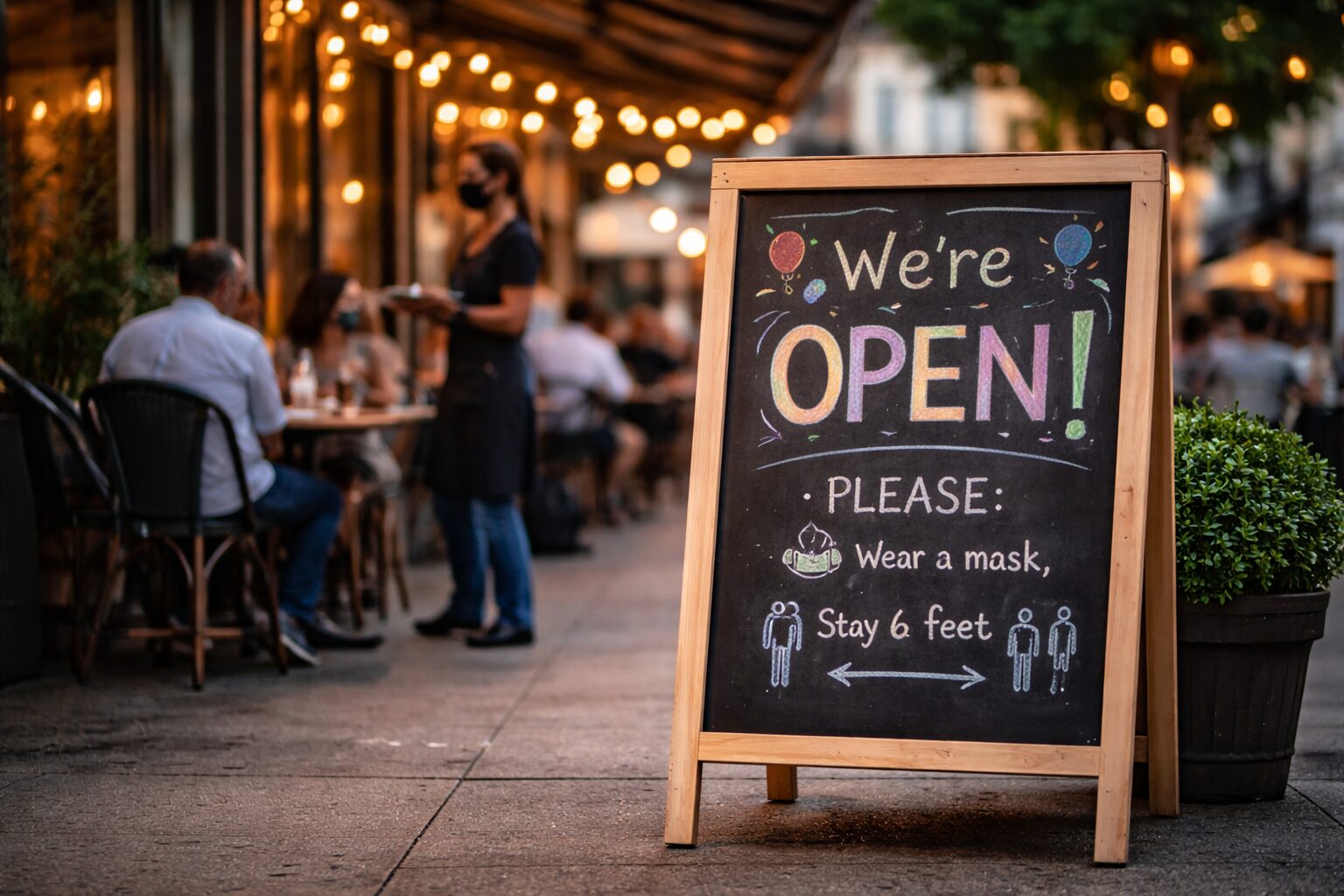
One of the first rituals of May 2020 is the sign.
Open. Closed. Essential. Reopen. Freedom. We are all in this together. Thank you heroes. We miss you. We’re back.
The sign is comforting because it’s legible. It creates the feeling of order. It suggests a clear status. It tells a story.
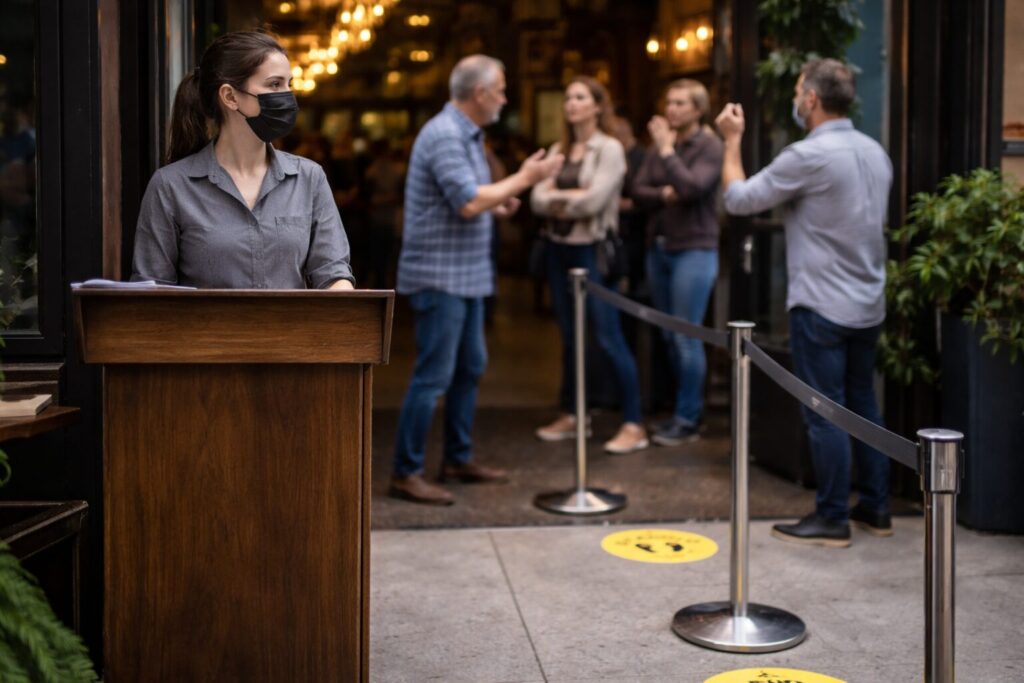
But the reality behind the sign is often chaos. Businesses guessing at rules. Workers improvising protection. Customers arguing about what counts as “required.” Managers turning into bouncers. The legal responsibility sliding downhill to the person paid the least.
The sign is a promise. The systems behind it are often missing.
The new job description: enforce the vibe
A reopening plan, in theory, is logistics. Ventilation. Distancing capacity. Clear standards. Mask rules. Sick leave. Enforcement. Financial support so compliance doesn’t mean bankruptcy.
What we actually got, in many places, is a vibe.
A laminated sheet at the door. Some tape on the floor. A bottle of sanitizer on a wobbly table. A handwritten note asking customers to be kind.
Then we asked frontline workers to do the rest.
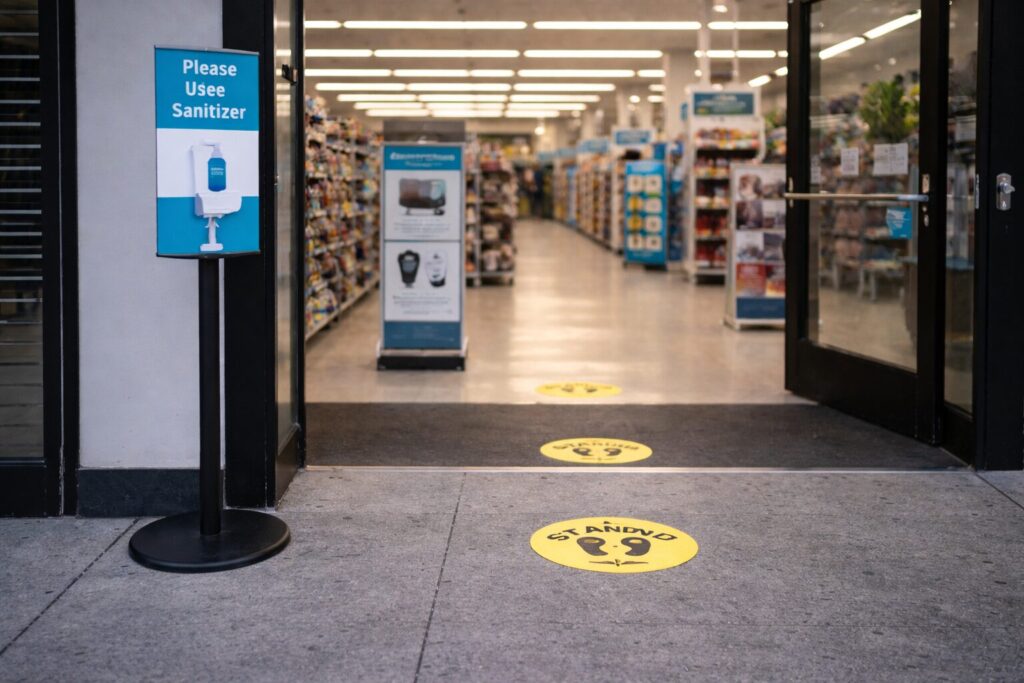
This is not the same as reopening. This is outsourcing public health to cashiers and hosts and security guards. This is an economy that is too cheap to build real systems, so it builds rituals and calls them safety.
If you’re a customer, you get to treat the rules like a personal opinion. If you’re a worker, you get to enforce that opinion while smiling.
This is how resentment is manufactured.
The politics of “I’m not scared”
There is a new kind of social bravado in May. The “I’m not scared” posture.
It shows up as a refusal to wear a mask. A refusal to follow store rules. A refusal to accept inconvenience. It shows up as a performance of toughness, as if a virus is impressed by your personality.
A pandemic turns some people into control freaks and others into contrarians. Both are coping. But the contrarian coping has become a political identity, because everything becomes identity now.
The mask is no longer a piece of fabric. It is a flag.
And flags have enemies.
When public health becomes identity, the arguments stop being about outcomes and start being about belonging. You don’t wear a mask because it reduces spread. You wear it to signal your team. You don’t refuse because you did research. You refuse because you refuse.
The virus is not part of your tribe. It is not moved by your defiance. But defiance has an audience, and in May 2020, the audience is often the point.
The camera chooses the story
The media, in a panic, looks for visuals. It can’t film an infection chain. It can film a protest. It can film a packed beach. It can film a screaming argument at a store entrance. It can film the mask being torn off someone’s face. It can film the “freedom” sign.
So the reopening debate becomes a gallery of moments, each one optimized for outrage. Each one designed to prove the other side is insane.
The quiet majority, the people wearing masks without drama, the businesses trying their best, the workers figuring it out, the families calculating risk, the nurses watching the numbers, the people staying home because they don’t have a choice, they don’t make good footage.
The camera doesn’t choose what matters. It chooses what moves.
And what moves tends to polarize.
The consumer fantasy
There is another performance happening in May, and it’s softer. The consumer fantasy that normal can be purchased.
If the café is open, maybe things are fine. If the salon is open, maybe we’re back. If the restaurant has a patio, maybe the crisis is over.
There’s a reason people want this. Buying normal is easier than living with uncertainty. It’s the same coping mechanism as doomscrolling, just prettier. Instead of refreshing the feed for control, you refresh your routines.
But routines don’t make the crisis stop. They just make it easier to forget it exists.
And forgetting is a privilege.
The economy is not a god, it’s a system
Every reopening debate eventually arrives at the same altar. The economy.
We speak about the economy like it is a force of nature, like gravity or weather. Something you cannot argue with. Something you must appease.
But the economy is a set of decisions. It is policy. It is incentives. It is which businesses get support and which are left to die. It is whether workers are protected or expendable. It is whether compliance is financially possible or morally demanded.
When politicians say, “We have to reopen,” what they often mean is, “We did not build the support systems required to stay closed.”
That is a policy failure, not a natural law.
The reopening we deserve
If reopening is going to be more than a stage show, it has to stop being a referendum on fear and start being a test of competence.
Competence looks boring. It looks like rules that are clear. It looks like enforcement that isn’t cruel. It looks like resources that let businesses comply without collapsing. It looks like paid sick leave that means people can stay home when they’re sick without being punished. It looks like treating workers as part of the plan, not as props for the plan.
A performance asks you to believe.
A plan asks you to trust.
Trust is harder, because it requires the system to deserve it.
The question under the argument
Here is the question hiding under every May 2020 fight.
Do we want to feel normal, or do we want to be safe.
And here is the more honest version.
Who gets to feel normal because someone else is taking the risk.
The reopening performance works because it offers a simple emotional payoff. It tells people they can stop being afraid. It tells them they can stop thinking. It tells them they can stop living inside a crisis.
It offers relief without repair.
But reality does not accept performances as payment.
Sooner or later, the bill arrives.
Leave a Reply