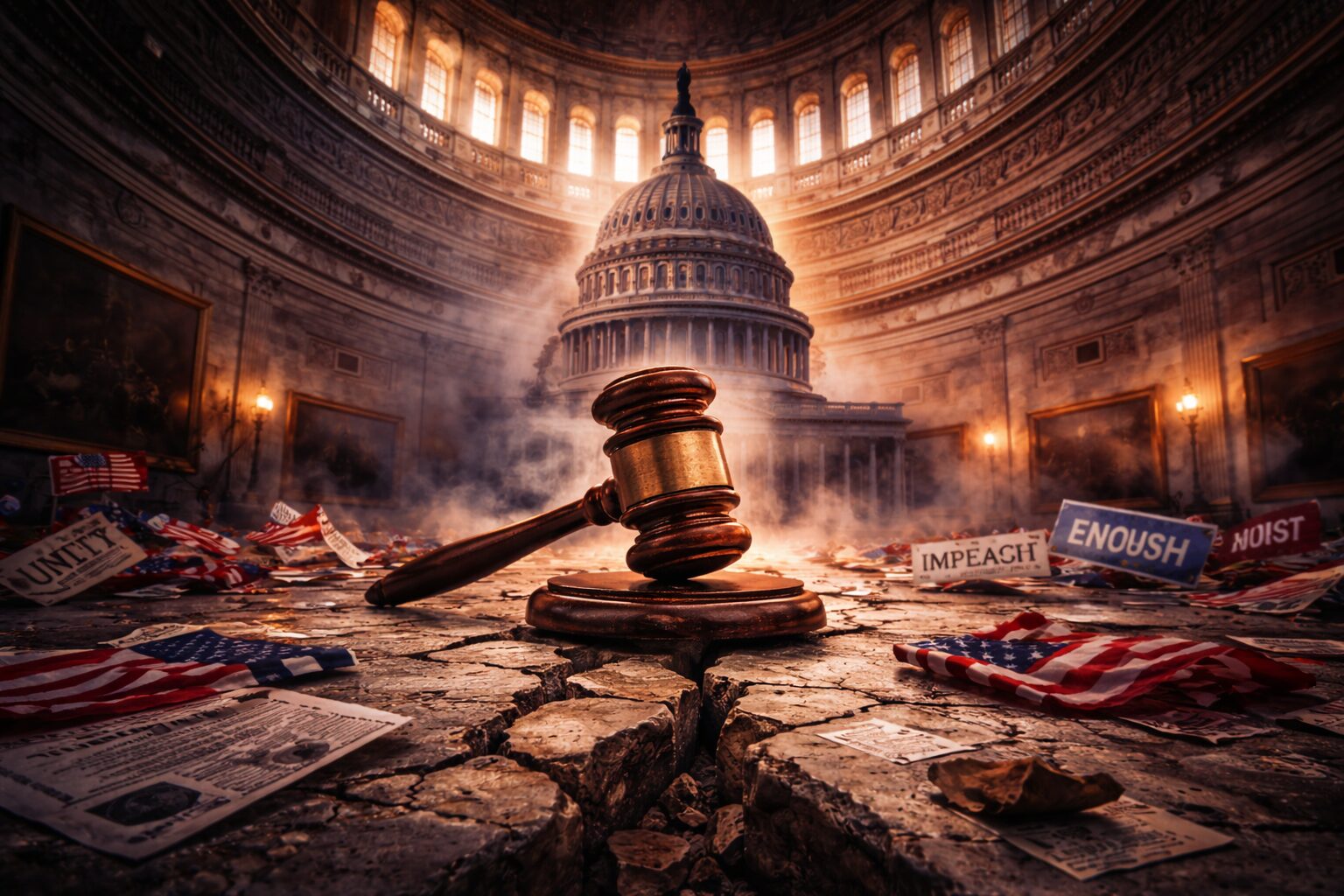
December is supposed to be the month of closure. The year comes to an end, the calendar turns, and we convince ourselves that a line on paper can tidy up whatever mess we made between January and now. But the truth of late 2019 is that nothing feels closed. Everything feels suspended.
We are an exhausted country staring at itself in a cracked mirror, trying to decide whether the fracture is superficial or structural. We are watching a presidency treat norms like optional guidelines. We are watching an opposition that often confuses moral clarity with moral exhibition. We are watching a media ecosystem that cannot resist turning the republic into content. And we are watching, perhaps most painfully, the slow normalization of cynicism, the casual acceptance of behavior that would have once been disqualifying, or at least debated as such.

This is not merely about one man. It is about whether we still believe that the rules matter when the rules become inconvenient.
Impeachment is a verdict on our expectations
The House has impeached President Trump. Depending on your political orientation, this is either the overdue reassertion of constitutional oversight or the final proof that Washington is a vindictive machine that cannot accept an election. That argument is now as predictable as gravity. Everyone has their prewritten lines. Everyone has their favorite clip. Everyone has a story that makes them feel certain.
But the deeper question is not what the House did. The deeper question is what we will tolerate.
For years, Americans have been quietly revising the job description of the presidency. We have been told to admire brazenness as authenticity, aggression as strength, insult as strategy. We have been told that corruption is merely “how the game is played.” We have been told that norms are for suckers, and that politics is best understood as domination, not persuasion.
Impeachment is the constitutional mechanism for confronting a president who abuses the public trust. It is also, whether we admit it or not, a cultural referendum on whether public trust is still something we value.
You cannot defend the health of the republic while insisting that every guardrail is “partisan” the moment it inconveniences your side.
The Senate trial will reveal more than it resolves
The Senate will conduct a trial. We all know how it will likely end. The votes will not be a surprise. The talking points will be polished and repeated. The president will declare vindication no matter what happens, and his critics will declare catastrophe no matter what happens.
So why does it matter?
Because the trial will reveal what has been obvious for months. We no longer argue about facts first. We argue about identities first. Facts are imported after the identity has been selected, like furniture ordered to match the living room you already built in your mind.
That is the fundamental sickness of 2019 American politics. We have become a nation where evidence is treated as décor.
If you want to understand the stakes, do not focus on who wins the procedural fight. Focus on what the country learns from it. If the lesson is that power can be used to pressure, to punish, and to protect, as long as you maintain partisan discipline, then the trial becomes a blueprint. The next president, from either party, will have studied it closely.
The republic does not die from one dramatic event. It dies from precedent.
The media isn’t the enemy, but it is the accelerant
A functioning democracy requires journalism. It requires scrutiny, verification, and the slow work of assembling a coherent picture from chaos. It also requires an audience willing to consume information like adults, not like addicts.
In 2019, we have an information system built for addiction.
Cable news fills hours with speculation because the machine demands motion. Social media turns every political event into a personality test because the algorithm demands reaction. Politicians perform for cameras and go viral because the incentive structure demands spectacle. Activists often talk as though persuasion is unnecessary because outrage is easier than argument.
And the citizen, caught in the middle, becomes a creature of reflex. We are trained to share first, read later. To dunk first, think later. To assume malice first, ask questions never.
This is not a neutral environment. It is a political weather system that produces storms on demand.
If you feel constantly angry, it may not be because you are uniquely principled. It may be because you are being farmed for attention.
The 2020 election will not fix what 2019 broke
Americans love the myth of the cleansing election. The idea that the next vote will wash away the grime, restore normalcy, and return us to a familiar civic rhythm. It is comforting. It is also childish.
The 2020 election will be consequential. It will shape the courts, the executive branch, and the direction of policy. But it will not automatically restore trust. It will not rebuild norms by itself. It will not detoxify the culture of politics-as-identity.
If Trump wins again, millions of Americans will interpret it as the final collapse of institutional accountability. If Trump loses, millions of Americans will interpret it as proof that the system was rigged against them. Either way, the emotional infrastructure that holds a diverse democracy together is already weakened.
We are not merely choosing a president. We are choosing whether we are still capable of sharing a country after the election.
That is not a technical question. It is a moral one.
The danger is not polarization. It is permission.
Polarization is not new. America has been polarized before. The country survived the 1960s, survived Watergate, survived Vietnam, survived the bitter fights over civil rights and culture and war. Polarization is a feature of any pluralistic society.
What is new is permission.
In 2019, we have granted ourselves permission to excuse behavior we would have once condemned. Permission to treat opponents as enemies. Permission to see compromise as betrayal. Permission to treat institutions as weapons rather than shared infrastructure. Permission to believe that winning justifies any method, as long as the other side is imagined as existentially dangerous.
This is how democracies become brittle. Not because citizens disagree, but because citizens stop believing disagreement can be managed without destruction.
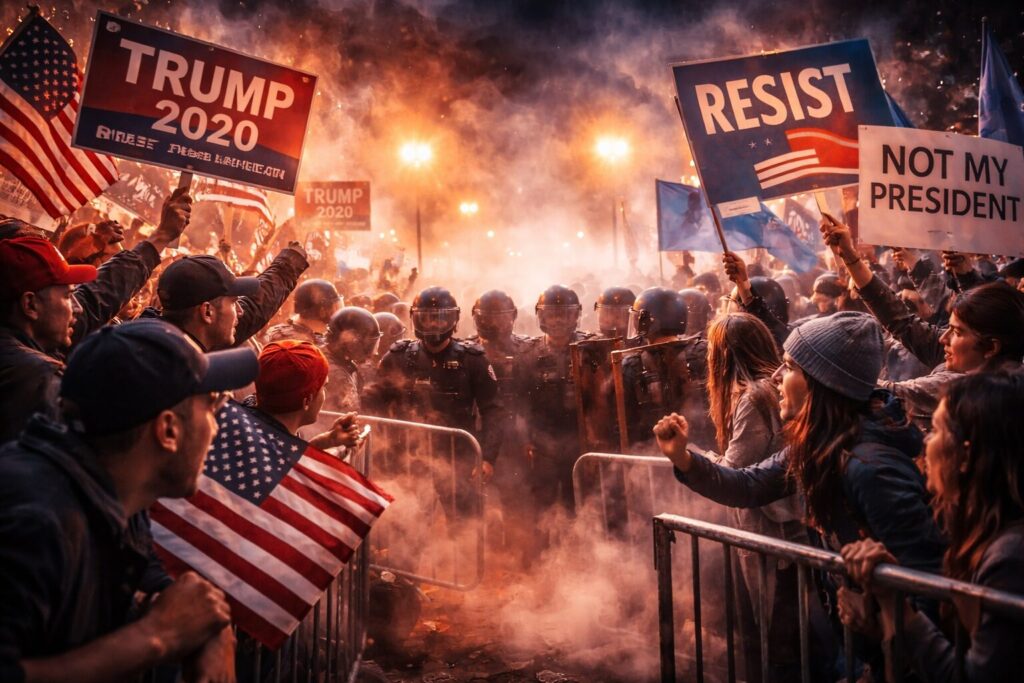
The most frightening phrase in American politics is not “impeachment.” It is “so what?”
“So what” is the sound of moral surrender.
A country cannot be governed by contempt
Contempt is intoxicating. It feels like intelligence. It feels like strength. It feels like moral superiority. It also corrodes everything it touches.
A society governed by contempt cannot solve problems, because problems require coalitions. A society governed by contempt cannot trust institutions, because institutions require legitimacy. A society governed by contempt cannot share facts, because facts require humility.
Contempt is the opposite of citizenship. It is the attitude of someone who wants the benefits of a shared country without the obligations of living with people they dislike.
In late 2019, contempt is our dominant national mood. It animates the president, it animates his critics, it animates the commentariat, and it animates ordinary citizens who have been trained to see every political conversation as a battlefield.
If we want a functioning republic, we will have to choose something harder than contempt. We will have to choose restraint.
The way out is not sentiment. It is standards.
There is a temptation, especially in December, to write a soft ending. To talk about unity, to tell ourselves that we are more alike than different, to offer platitudes about healing.
Healing is not a slogan. It is a practice.
It begins with standards that apply regardless of party. Standards for presidential behavior. Standards for congressional oversight. Standards for evidence and truth. Standards for journalism. Standards for what we share online. Standards for how we speak to people who disagree.
If you cannot criticize your own side, you do not have principles. You have a team.
If you cannot admit uncertainty, you do not have knowledge. You have posture.
If you cannot see your political opponents as human beings, you are not defending democracy. You are defending a fantasy of domination.
The republic does not require that we all agree. It requires that we all accept constraints. It requires that we all recognize that power must be limited, that truth is not negotiable, and that institutions exist to restrain the worst impulses of human nature, including our own.
December 2019 is not the end of the story. It is the moment where the country has to decide what it will carry into the next decade.
We can carry our rage, our certainty, and our contempt. Or we can carry something more durable.
We can carry standards.
And if that sounds unromantic, good. Democracies are not sustained by romance. They are sustained by people who insist that the rules matter, especially when the rules are inconvenient.
That is what patriotism looks like when the flag is no longer a prop.
It looks like restraint.
Leave a Reply