
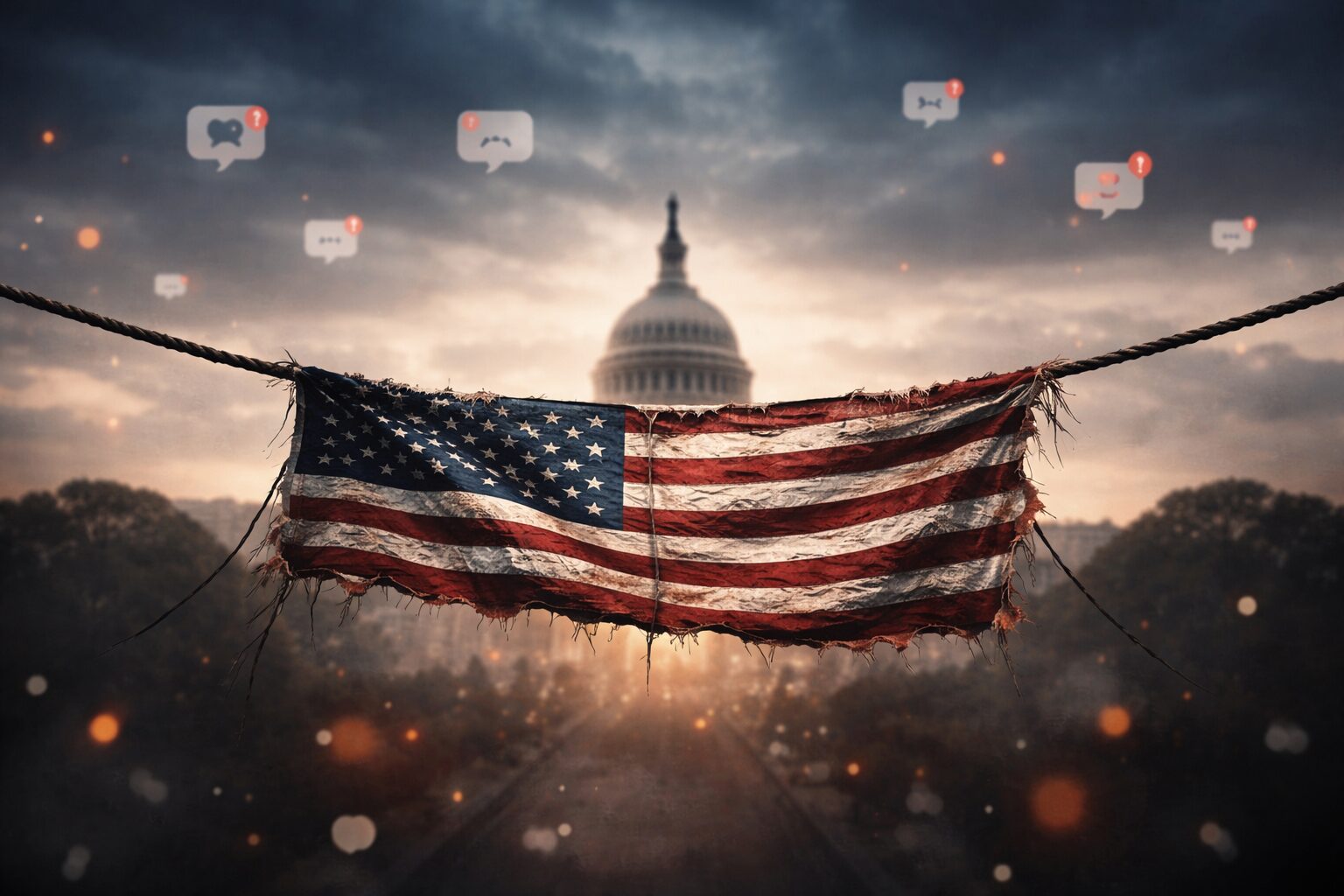
There’s a particular kind of exhaustion in America right now, an exhaustion that doesn’t come from a long day’s work, but from the constant, grinding awareness that every headline is a loyalty test, every conversation is a minefield, and every institution we used to treat like background infrastructure is suddenly the main character in an endless national drama.
Is this what we meant by “Make America Great Again”? Or is this what we meant by “Resistance”? And if you’ve already bristled at one of those phrases, ask yourself: when did a slogan become a substitute for thinking?
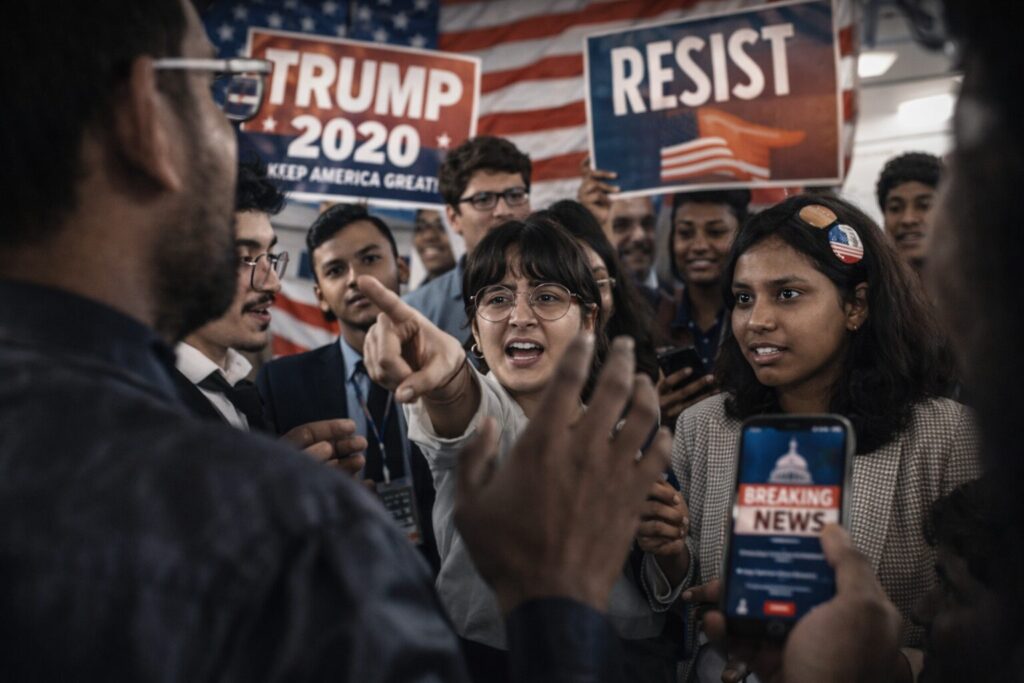
Because that’s the trick of 2019 politics. It doesn’t just divide us. It trains us. It trains us to react faster than we reason, to identify enemies before we identify facts, to treat our neighbors like they’re auditioning for a role in our personal morality play. It is, in the most literal sense, a culture of reflex. And it’s eating the country alive.
“In 2019, politics doesn’t just divide us. It trains us.”
The impeachment question isn’t the whole question
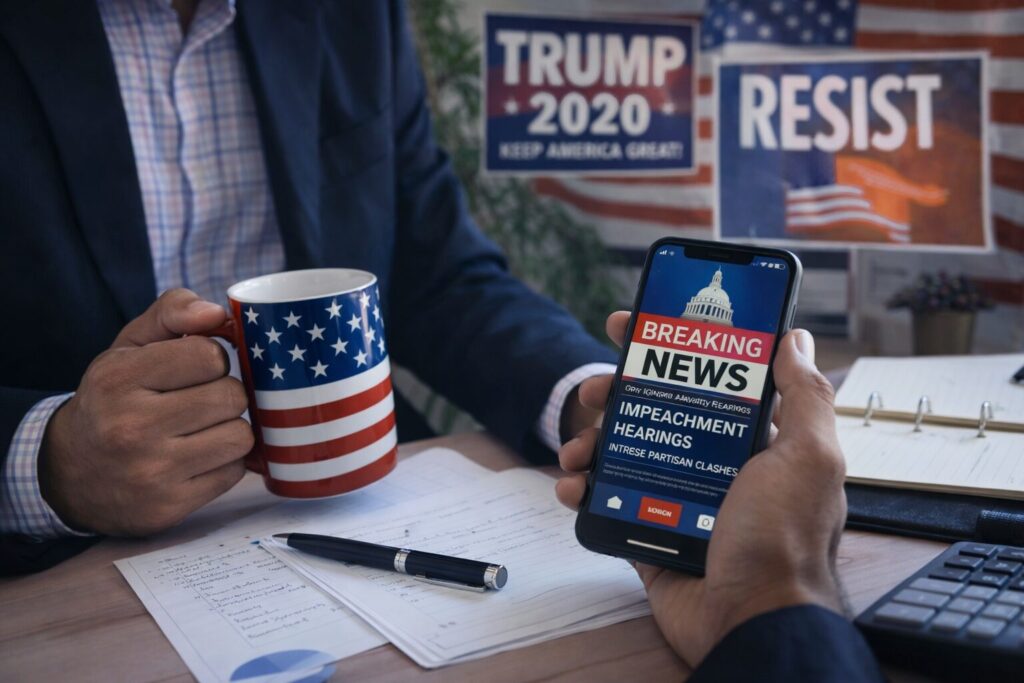
Yes, impeachment dominates everything. The hearings, the testimonies, the cable news theater, the clipped soundbites turned into memes before the witness even leaves the room. The president’s defenders insist this is a “witch hunt,” a partisan coup dressed up as oversight. The president’s critics insist the evidence is plain as day, that the rule of law is on the line, that history will judge anyone who shrugs.
But impeachment is a symptom as much as it is an event. The deeper question is this: What do we want the presidency to be? A job, constrained by norms and law? Or a throne, constrained only by whether your side can keep power?
If you believe the office is sacred, you should be disturbed by the idea that any president, this one, the next one, your favorite one, could treat foreign policy like a personal bargaining chip. If you believe politics is purely tribal warfare, you’ll treat the whole spectacle as just another battlefield where the only sin is losing.
And here’s the unpleasant truth. A lot of Americans have quietly made peace with the second option. Not because they’re evil, but because they’re afraid. They’re afraid that if their side blinks, the other side will rewrite the country in ways they can’t recognize. Fear is the fuel. Outrage is the exhaust.
“Truth” has become a team sport
We’ve all watched the same movie this year. A fact emerges, then immediately splits into two alternate realities. In one reality, it’s damning. In the other, it’s fake, or irrelevant, or “what about” something else. The point isn’t even to convince the other side anymore. The point is to keep your side emotionally supplied.
How did we get here?
We built an information ecosystem that rewards the loudest interpretation, not the most accurate one. We’ve turned politics into a form of entertainment, then acted shocked when it behaves like entertainment. We’ve allowed social media to become a national nervous system with no capacity for calm. Every tiny jolt is treated like an existential shock.
And it’s not just the president who benefits from this chaos. His opponents benefit too. Moral panic is profitable. Indignation is fundraising rocket fuel. Every side has learned that the quickest path to attention is to inflame. The question is not “Is this true?” It’s “Will this spread?”
If you’re wondering why it feels impossible to talk anymore, why Thanksgiving dinner sounds like a Senate hearing and your group chat reads like a campaign ad, it’s because our public language has been weaponized. We’ve stopped describing and started prosecuting.
The 2020 election is already poisoning the present
Meanwhile, the 2020 race looms like a storm cloud that never moves. Democrats are trying to decide whether to run as managers, revolutionaries, or therapists. Republicans are trying to decide whether to pretend this is normal or declare that normal was always a lie. The country is stuck watching a contest where every policy position doubles as a cultural signal.
Healthcare? It’s not just about coverage. It’s about what kind of society you think you live in, and what kind you fear is coming. Immigration? It’s not just about borders. It’s about identity, belonging, and a gnawing anxiety about whether the future has room for you. The economy? It’s not just about growth charts. It’s about dignity, power, and who gets to feel secure.
In a healthier era, these debates might produce compromise, or at least clarity. In 2019, they produce branding. Candidates speak in slogans because slogans travel. Voters speak in absolutes because absolutes feel safe. Nuance sounds like betrayal.
And here’s a question we should be asking more often: Are we voting for outcomes, or for emotional validation? Do we want better governance, or do we want the feeling of owning the other side?
Institutions aren’t indestructible, just familiar
We take for granted that American institutions will hold. The courts will function. The press will inform. Elections will be trusted. The transfer of power will occur. We treat these like laws of physics.
They aren’t. They’re habits. They’re agreements. They’re norms that survive only as long as enough people, leaders and citizens alike, decide they matter.
In 2019, those agreements are fraying. Not collapsing in a single dramatic moment, but thinning like fabric pulled too many times. When politicians treat oversight as sabotage, when voters treat bad behavior as “just politics,” when media treat every conflict as content, we’re not just arguing about one president. We’re rehearsing a future where rules are optional.
And that future won’t care whether you wore a red hat or marched with a pink one.
The cruelty, the sanctimony, and the mirror
Let’s be honest. The ugliest parts of American politics aren’t confined to one party. The right has embraced a style of combat that often confuses cruelty for strength and provocation for courage. The left has embraced a style of moral certainty that often confuses shaming for persuasion and purity for progress. Each side has its own dopamine loop: trigger, outrage, applause, repeat.
The right says: “They hate you. Fight.”
The left says: “They’re monsters. Shame.”
Both are forms of surrender. Surrender to the idea that the only way to win is to dehumanize.
So ask yourself: when you read the news, do you become more informed, or more addicted? When you talk politics, do you become more precise, or more performative? When you encounter someone who disagrees, do you become curious, or do you reach for the nearest label and end the conversation?
What now?
It’s tempting to end with a tidy moral: vote, organize, care. And yes, vote. Absolutely. But voting isn’t a cleansing ritual. It doesn’t purify us from the habits that got us here. A new president won’t magically fix the national character. A single election won’t restore trust if we keep training ourselves to hate.
The harder work is cultural and personal. It’s learning how to argue without turning disagreement into annihilation. It’s demanding standards from your own side, not just the other one. It’s refusing the seductive comfort of believing that the people you oppose are beyond redemption.
Because here is the central question of 2019 America:
Do we still believe we share a country?
Not a battlefield. Not a reality show. Not a cold civil war conducted through tweets and yard signs. A country, messy, pluralistic, maddening, but shared.
If the answer is yes, then the next question follows. What are you willing to give up to prove it? A little outrage? A little certainty? A little performative contempt?
If the answer is no, then congratulations. You’ve chosen the politics of permanent enemy. Don’t be surprised when it chooses you back.
And don’t be surprised when the razor’s edge finally cuts.
Leave a Reply